
The Biggest Investing Mistakes Beginners Make — and How to Avoid Them
For many people, investing begins with excitement and a sense of possibility. The idea of growing wealth, achieving financial independence or simply making better use of savings is undeniably appealing. Yet for every success story, there are countless beginners who stumble early, often for reasons that are entirely avoidable.
The truth is that most investing mistakes are not about intelligence or access to information: they are about behaviour. Emotional reactions, misplaced confidence and simple misunderstandings can quietly chip away at returns over time. Recognising these pitfalls is the first step towards avoiding them.
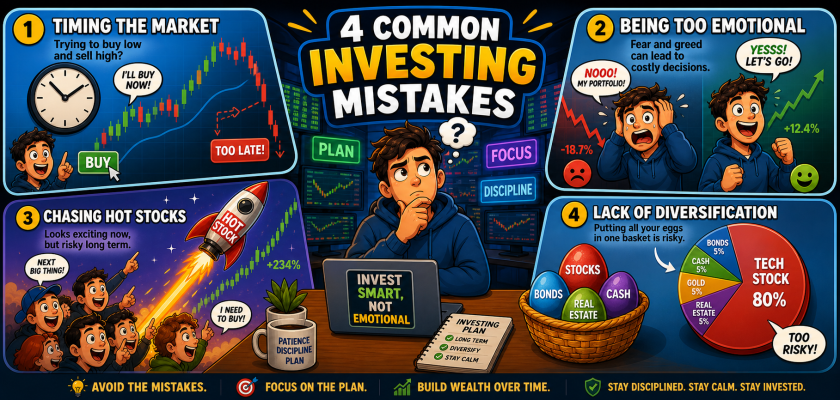
Below are four common mistakes new investors make, and how to steer clear of them.
Emotional Investing: When Feelings Take the Wheel
Perhaps the most damaging mistake is allowing emotions to drive decisions. Markets rise and fall, sometimes sharply, and it is natural to feel excitement during booms and anxiety during downturns. The problem arises when these feelings translate into action.
A beginner investor might buy shares after a strong rally because everyone seems to be making money. Conversely, they might panic and sell during a market dip, fearing further losses. In both cases, decisions are driven by short-term emotions rather than long-term thinking.
Consider an investor who sells their portfolio after a 15% drop, only to miss the subsequent recovery. This pattern, repeated over time, can significantly reduce returns.
The way to avoid this is to establish a clear plan before investing. Decide on your goals, your time horizon and your tolerance for risk. Once that plan is in place, stick to it. Markets will fluctuate, but a disciplined approach helps prevent costly knee-jerk reactions.
It can also help to limit how often you check your portfolio. Constant monitoring can amplify emotional responses and tempt you into unnecessary trades.
Chasing Trends: The Allure of What Is Popular
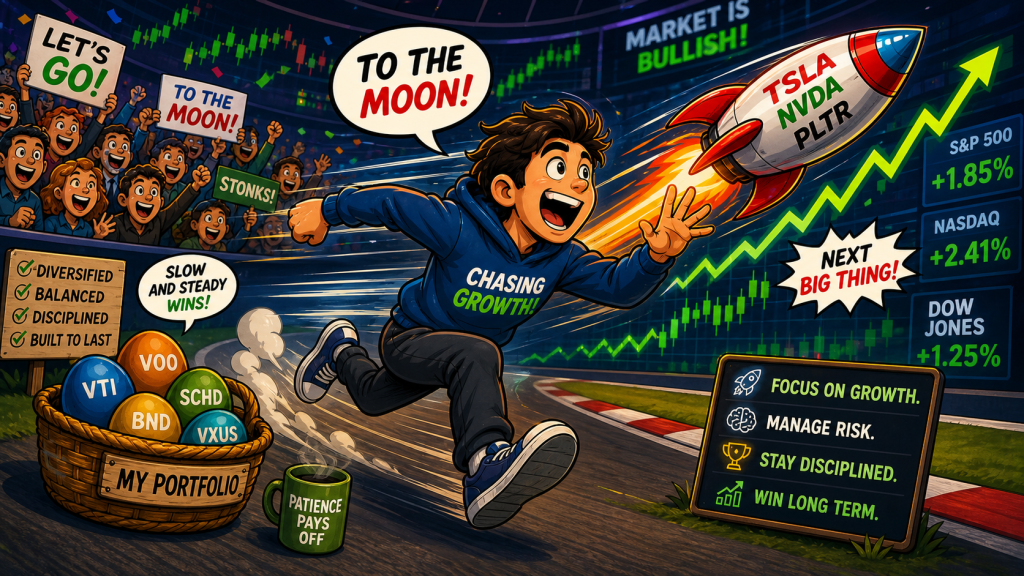
Another common mistake is chasing the latest investment trend. Whether it is a booming technology sector, a fashionable cryptocurrency or a “hot” stock featured in the media, beginners are often drawn to whatever is currently performing well.
The danger here is that by the time something becomes widely popular, its price has often already risen significantly. Buying at this stage can mean paying too much, leaving little room for further gains and increasing the risk of losses if the trend reverses.
A familiar example is the surge in interest in certain sectors during periods of rapid growth. Investors pile in at the peak, only to see prices fall once enthusiasm fades. The Dot Com bubble is a very real example of this, and it may be happening in AI stocks right now.
Avoiding this trap requires a shift in mindset. Instead of asking, “What is everyone buying?”, a better question is, “Does this investment fit my long-term strategy?” Focus on fundamentals such as the quality of the business, its earnings potential and its valuation.
Diversified funds or broad market investments can also help reduce the temptation to chase individual trends. They offer exposure to a wide range of assets without relying on any single idea to succeed.
Lack of Diversification: Putting Too Much in One Basket
Diversification is often described as the only free lunch in investing, yet many beginners overlook it. Concentrating a portfolio in a handful of shares or a single sector may seem appealing, especially if those investments perform well initially. However, it also increases risk.
If one investment performs poorly, it can have a disproportionate impact on the overall portfolio. This is particularly problematic for new investors who may not yet have the experience or resources to absorb significant losses.
Imagine an investor who allocates most of their savings to a single company they believe in. If that company faces unexpected challenges, the consequences for the investor can be severe.
A more balanced approach involves spreading investments across different asset classes, industries and regions. This does not eliminate risk, but it reduces the impact of any single setback.
For beginners, exchange traded funds and managed funds can provide an easy way to achieve diversification. These products pool money across a wide range of assets, offering built-in variety without requiring extensive research.
Trying to Time the Market: A Risky Game
The idea of buying at the lowest point and selling at the highest is undeniably attractive. Unfortunately, it is also extremely difficult to achieve consistently, even for experienced investors.
Beginners often attempt to time the market by waiting for the “perfect” moment to invest or by trying to predict short-term movements. In practice, this can lead to missed opportunities.
For example, an investor who delays investing while waiting for a downturn may end up sitting on the sidelines during a period of strong growth. Similarly, selling in anticipation of a decline can result in missing a rebound.
Research has shown that a significant portion of long-term returns comes from a relatively small number of strong market days. Missing these days can have a substantial impact on overall performance.
A more reliable approach is to invest regularly over time, a strategy often referred to as dollar-cost averaging. By investing a fixed amount at regular intervals, you reduce the impact of market timing and benefit from both rising and falling prices.
Patience is key. Investing is a long-term endeavour, not a short-term guessing game.
A Smarter Path Forward
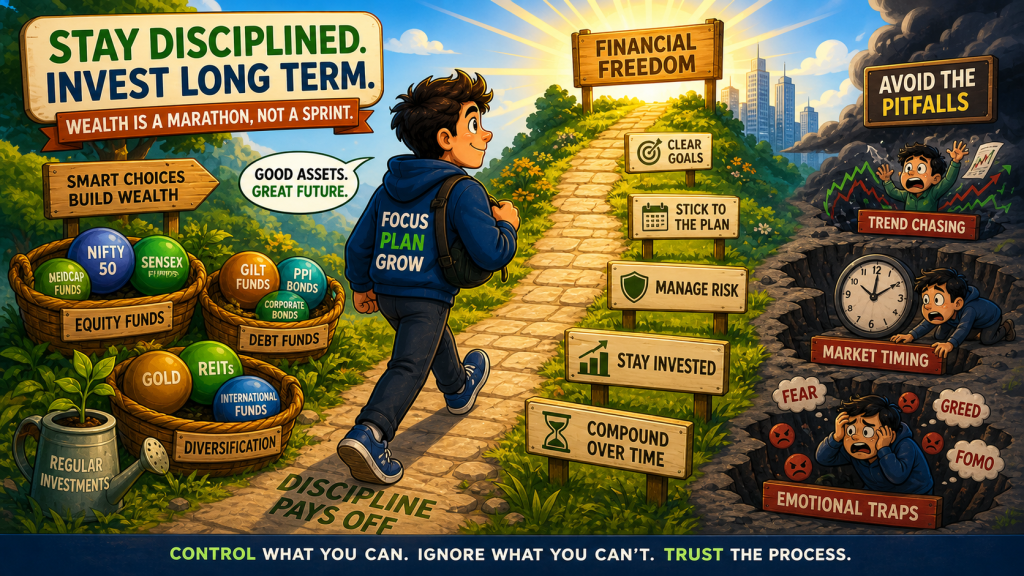
Avoiding these common mistakes does not require advanced knowledge or complex strategies. It requires discipline, consistency and a willingness to think long term.
Successful investing is less about finding the perfect stock and more about building good habits. Stay focused on your goals, diversify your investments and resist the urge to react to every market movement.
In the end, the biggest advantage a beginner can have is not superior information, but a steady approach. Those who can keep their emotions in check, ignore the noise and stick to a sensible plan are far more likely to succeed.
The market will always test your patience. The question is whether you let it dictate your decisions or whether you remain firmly in control.

